
Views: 0 Author: Site Editor Publish Time: 2026-01-13 Origin: Site


While basic definitions describe a drone simply as an Unmanned Aerial Vehicle (UAV), the industrial reality is far more intricate. A commercial-grade drone represents a complex integration of precision mechanics, advanced avionics, and high-performance material science. It is not merely a flying camera but a sophisticated data collection platform dependent on rigorous engineering.
A common failure point for many hardware startups is the "Manufacturing Gap." This occurs when functional prototypes, which fly perfectly in controlled tests, fail to scale into reliable mass production due to inconsistent component sourcing or loose manufacturing tolerances. This guide aims to bridge that gap. We will deconstruct the drone system not just by identifying its components, but by analyzing how professional UAV Parts Production ensures flight stability, regulatory compliance, and long-term commercial viability.
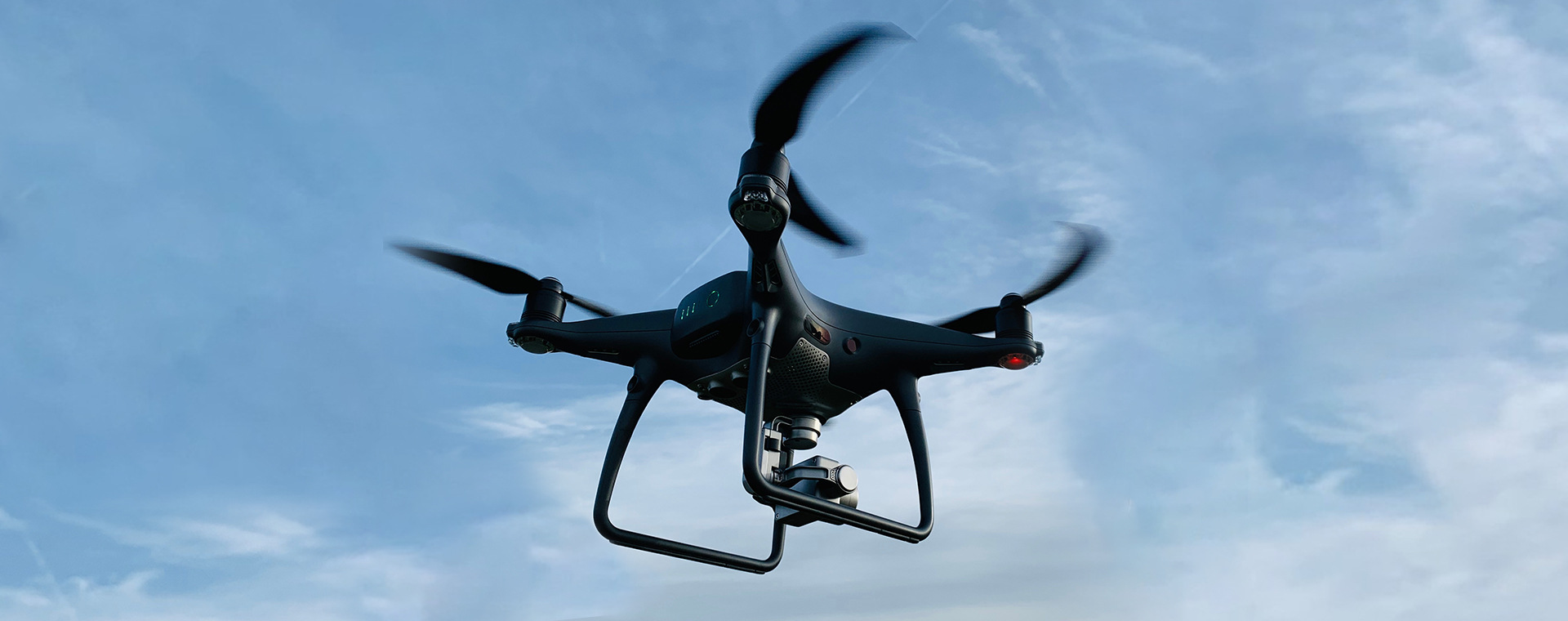
System Integrity: A drone is a balance of vibration management, weight reduction, and thermal efficiency; component precision directly impacts flight autonomy.
Material Strategy: The trade-offs between Carbon Fiber (CFRP) for frames and Aluminum Alloys for motor housings define the drone’s durability and heat management.
Production Scalability: Moving from 3D printed prototypes to Die-Casting and CNC machining reduces unit costs but requires high upfront tooling investment.
Sourcing Reality: Leveraging Chinese manufacturers and specialized partners like Ganyee allows access to mature supply chains, provided strict quality controls are in place.
To understand how to build a scalable product, you must view the drone as a "precision platform." Unlike hobbyist models where a slight drift is acceptable, industrial drones used for mapping or inspection require absolute stability.
We distinguish components into two categories: "Flight Critical" and "Payload." Flight Critical components, such as motor housings and Electronic Speed Controllers (ESCs), dictate safety and reliability. Payload components, like cameras or LiDAR sensors, dictate value. The manufacturing quality of the former directly enables the performance of the latter.
The frame is the skeleton of the aircraft. Its primary job is not just to hold parts together, but to provide rigidity. If a frame flexes during aggressive maneuvers, it introduces low-frequency vibrations.
These vibrations travel to the Inertial Measurement Unit (IMU) inside the flight controller, causing sensor noise that degrades flight autonomy. To combat this, engineers must carefully select materials. Carbon Fiber Reinforced Polymer (CFRP) is the standard for arms and propellers due to its high strength-to-weight ratio. However, central chassis components and frames and motor housings are often machined from aerospace-grade aluminum. Aluminum offers superior structural integrity and mounting precision that carbon fiber plates sometimes lack, ensuring that arm joints do not loosen over time.
The propulsion system is where electrical energy converts into mechanical thrust. The manufacturing tolerances here are unforgiving.
Motor Housings: Brushless motors rely on a tiny air gap between the stator and the rotor magnets. Precision manufacturing is required to maintain this gap. Even a 0.05mm deviation can cause inefficient magnetic flux, leading to overheating and reduced flight time.
Thermal Dynamics: High-performance industrial drones generate significant heat. The physical design of the motor mount often acts as a passive heat sink. By using CNC-machined aluminum mounts, heat is drawn away from the motor windings and dissipated into the airflow, preventing thermal throttling during heavy-lift operations.
The avionics suite—comprising the Flight Controller (FC), ESCs, and GPS modules—functions as the drone's nervous system. While these are electronic components, their performance is strictly mechanical. A GPS module mounted on a vibrating frame will struggle to hold a position lock. An ESC that overheats due to poor airflow design will shut down mid-flight. Therefore, the mechanical design of the chassis must prioritize vibration dampening and airflow management to protect these sensitive electronics.
Choosing the right manufacturing process depends on your product's lifecycle stage. The method used for a batch of ten units is rarely economically viable for a batch of ten thousand.
| Process | Best For | Pros | Cons |
|---|---|---|---|
| 3D Printing | Prototyping & Fit Checks | Fast iteration, complex geometries, no tooling cost. | Weak structural integrity, poor heat resistance, unscalable. |
| CNC Machining | High-Precision Components | Tight tolerances, excellent surface finish, strong materials. | High per-unit cost, slower production time. |
| Die-Casting | Mass Production | Low unit cost, consistent repeatability, high volume. | High upfront tooling (mold) costs. |
| Injection Molding | Plastic Enclosures/Props | Extremely low unit cost, lightweight parts. | Not suitable for high-load structural parts. |
Additive manufacturing is invaluable for the initial design phase. It allows engineers to rapidly prototype frame geometries and check component fitment without waiting for metal parts. However, 3D printed parts generally lack the structural consistency required for flight. They are sensitive to heat and UV radiation, making them unsuitable for end-use parts in industrial environments.
For drone Parts manufacturing, Computer Numerical Control (CNC) machining is the gold standard for critical components. Parts like motor mounts, folding arm mechanisms, and camera gimbals require tolerances tighter than 0.01mm to minimize vibration. CNC machining ensures that every unit coming off the line is identical, maintaining the center of gravity and balance of the aircraft.
When production volumes scale up—typically crossing the 1,000-unit threshold—manufacturers often transition to Die-Casting. This process involves forcing molten metal into a mold cavity under high pressure. It is ideal for producing complex chassis parts, heat sinks, and structural connectors efficiently. While the initial investment for molds is significant, the per-unit cost drops dramatically, improving the product's total margin. Manufacturers often use specialized magnesium or aluminum alloys in this process to achieve a balance of strength and weight savings.
For non-load-bearing components such as protective covers, landing gear feet, or aesthetic shells, injection molding is the most cost-efficient method. It offers the lowest price per unit and allows for a wide variety of surface finishes and colors. However, plastic lacks the rigidity needed for the core frame, so it is usually used in conjunction with metal or carbon fiber skeletons.
It is an industry reality that the majority of the UAV parts production supply chain is centralized in China, specifically around Shenzhen and Dongguan. This region offers unparalleled speed to market. The proximity to raw material suppliers—such as producers of high-grade neodymium magnets for motors and carbon fiber weaves for frames—creates a highly efficient ecosystem.
Finding a reliable partner is critical. When evaluating Chinese manufacturers, you should look for specific capabilities. A robust supplier, such as Ganyee, offers a bridge between prototyping and mass production. They should be capable of handling both low-volume CNC turning for initial batches and high-volume Die-Casting for full-scale production.
Quality assurance is another non-negotiable factor. Look for ISO certifications and specific experience with aerospace or UAV tolerances. A common pitfall for startups is "fragmented sourcing"—buying frames from one vendor and motors from another. This often leads to tolerance stacking issues where parts are individually within spec but fail to fit together perfectly. Sourcing from a one-stop partner reduces this risk significantly.
Protecting your Intellectual Property (IP) is vital when outsourcing. Use non-disclosure agreements (NDAs) and consider separating the manufacturing of proprietary electronics from structural hardware if necessary. Additionally, implementing rigorous batch consistency testing, such as First Article Inspection (FAI), ensures that the 1,000th unit matches the quality of the first.
Successful drone manufacturing is measured by performance metrics that are directly influenced by production quality.
Manufacturing defects are the primary cause of the "Jello effect"—the rolling shutter distortion seen in aerial video. Even worse, these micro-vibrations confuse the flight controller, forcing it to over-correct thousands of times per second. This destabilizes the flight algorithms and drains the battery. Balancing dynamic components, such as motor bells and propellers, during the production phase is essential to eliminate this issue at the source.
Industrial drones often operate in harsh environments. The choice of surface treatment dictates the lifespan of the hardware. Aluminum parts should be anodized to prevent corrosion, especially for maritime applications. Carbon fiber requires specific coatings to prevent delamination from moisture ingress. Achieving high IP (Ingress Protection) ratings requires designing enclosures that seal internal electronics effectively against dust and rain.
Business decisions often come down to Total Cost of Ownership.
Prototype Phase: High unit cost due to machining time, but low tooling cost (no molds). Flexibility is high.
Production Phase: Low unit cost, but high upfront capital for tooling. Flexibility is low.
Decision Point: You must calculate the break-even point. If you plan to sell 500 units, CNC might be cheaper overall. If you plan to sell 5,000, investing in Die-Casting molds becomes the financially sound choice.
One of the most insidious issues in hardware assembly is tolerance stack-up. If a drone arm is 0.1mm too long, the motor mount is 0.1mm too thick, and the chassis plate is 0.1mm too wide, these minor deviations aggregate. The result is a misalignment that can cause catastrophic flight instability or structural failure under load. Engineers must define geometric dimensioning and tolerancing (GD&T) strictly to ensure parts mate correctly.
Drones are subjected to high-frequency vibration during every second of flight. This leads to material fatigue. Aluminum alloys have a fatigue limit; if stress remains below this limit, the part can theoretically last indefinitely. Plastics, however, do not have a fatigue limit and will eventually crack under repeated stress cycles. Understanding these lifecycles is crucial for defining maintenance schedules and warranty periods.
Manufacturing choices also impact legal compliance. Many regions have strict weight classifications (e.g., sub-250g categories) that exempt operators from certain regulations. Every gram of material excess in manufacturing can push a product out of this profitable category. Furthermore, new regulations like Remote ID require dedicated physical space and non-interfering materials for broadcasting modules, which must be integrated into the chassis design.
A successful commercial drone is more than the sum of its parts; it is the result of precise, strategic manufacturing choices. The journey from a working prototype to a scalable product involves navigating complex trade-offs between material properties, production processes, and supply chain logistics.
For businesses looking to scale, the transition from "assembling parts" to "engineering production lines" is the key to success. We encourage you to audit your current Bill of Materials (BOM) and evaluate your manufacturing readiness. Consider partnering with specialized experts like Ganyee for high-precision UAV parts production. Their expertise in ensuring tight tolerances and scalable supply chains can be the difference between a grounded project and a market-leading platform.
A: The primary difference lies in volume versus precision. CNC machining is a subtractive process ideal for prototypes and high-tolerance parts where precision is paramount, but costs are higher per unit. Die-Casting is an additive process suited for mass production; it requires a high upfront investment for molds but significantly reduces the per-unit cost for large batches.
A: Chinese manufacturers dominate due to ecosystem efficiency. Regions like Shenzhen offer immediate access to specialized raw materials (like rare earth magnets and carbon fiber) and a mature, skilled labor force experienced in both electronics and precision mechanics, allowing for rapid prototyping and scaling.
A: A hybrid approach is often best. Carbon fiber tubes are ideal for arms due to their light weight and stiffness. However, central frame plates and motor mounts are best made from CNC-machined aluminum to provide the structural strength and heat dissipation required for heavy payloads.
A: Precision directly impacts efficiency. Manufacturing defects cause vibrations, which force the flight controller to constantly adjust motor speeds to maintain stability. This wasted energy, combined with heat loss from inefficient motors (due to poor air gap tolerances), significantly reduces overall flight time.
