
Views: 0 Author: Site Editor Publish Time: 2026-01-18 Origin: Site


The transition from assembling hobbyist kits to engineering industrial-grade unmanned aerial vehicles (UAVs) represents a quantum leap in complexity. While a hobbyist focuses on getting a drone airborne, commercial UAV Parts Production prioritizes reliability, tight tolerances, and advanced material science. A single component failure in an industrial setting can result in significant financial loss or safety hazards. Therefore, understanding the anatomy of a drone requires looking beyond simple gadgetry.
We must view the drone as an integrated ecosystem where structural, propulsive, and electronic subsystems interact continuously. This guide dissects the full anatomy of a UAV, analyzing components through the lens of Precision manufacturing and supply chain evaluation rather than just basic functionality. You will learn how material choices impact flight characteristics and why manufacturing quality is the ultimate determinant of performance.
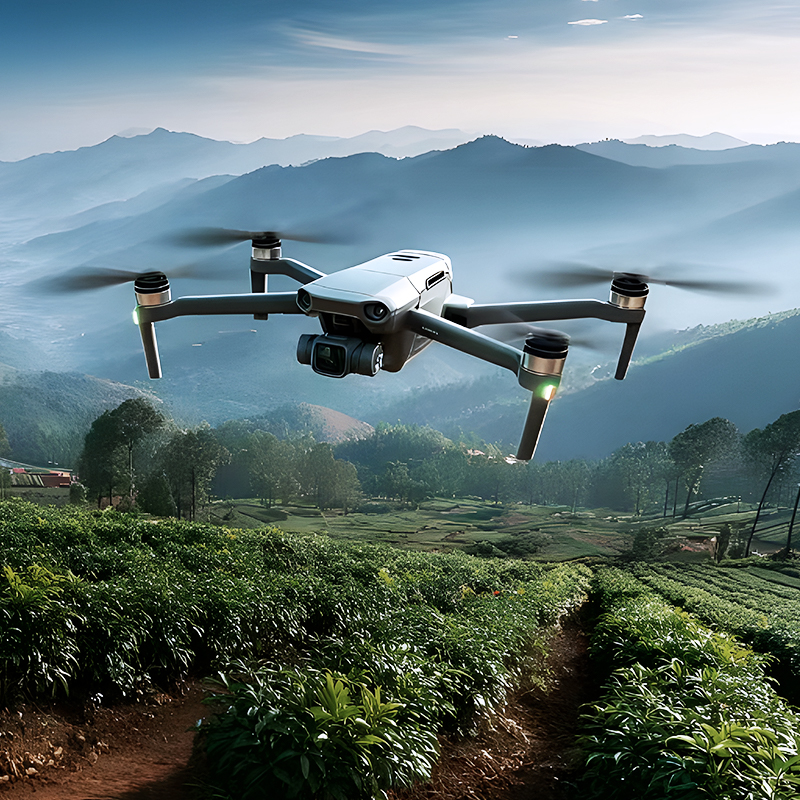
Material Science Matters: The choice between Carbon Fiber and Die-Cast Aluminum for frames and motor housings dictates the drone's durability and TCO (Total Cost of Ownership).
Manufacturing Tolerances: In UAV Parts Production, micrometer-level precision determines flight stability and vibration control.
Supply Chain Realities: Leveraging established Chinese manufacturers (like Ganyee) requires understanding the difference between rapid prototyping and scalable mass production.
System Integration: High-quality individual parts fail without precise integration; thermal management and weight distribution are as critical as the components themselves.
The structural integrity of a drone defines its operational limits. It is not merely a skeleton; it is the chassis that handles mechanical stress, vibration resonance, and payload distribution.
The frame serves as the central hub. It determines the drone's payload capacity, aerodynamic profile, and resistance to environmental stressors. When evaluating a chassis, the stiffness-to-weight ratio is the primary metric. A frame that flexes under load introduces noise into the flight controller's sensor data, causing erratic flight behavior.
Material selection is the critical variable here. Carbon fiber is the industry standard for arms and plates due to its exceptional lightness and rigidity. However, it can be brittle under high-impact shock. For central body components and joints, engineers increasingly turn to frames and motor housings made from aluminum alloys. These metal components offer superior structural resilience and act as heat sinks for onboard electronics.
Landing gear design involves a trade-off between mechanical complexity and functionality. Fixed landing gear is robust, lightweight, and has zero moving parts, making it highly reliable for delivery or racing drones. However, for cinematography or inspection drones, fixed legs often obstruct the camera's field of view.
Retractable landing gear solves the obstruction issue but introduces servos and mechanical linkages that become potential failure points. Furthermore, the shock absorption capability of the gear is vital. Hard landings transmit shock waves directly to sensitive sensors. Poorly designed gear accelerates the degradation of IMU calibration and can damage gimbal motors over time.
Motor mounts are often overlooked, yet they are the frontline defense against vibration. Precision manufacturing ensures that the motor sits perfectly flat against the arm. Even a fraction of a degree in misalignment can cause the drone to drift, forcing the flight controller to overwork to maintain a hover.
Thermal design also plays a massive role here. High-performance brushless motors generate significant heat. Plastic mounts act as insulators, trapping heat and shortening motor life. In contrast, aluminum mounts and housings facilitate passive cooling, dissipating thermal energy into the air stream generated by the propellers. This prevents "jello effect" in video feeds caused by high-frequency micro-vibrations.
The propulsion system converts electrical energy into mechanical thrust. This system must be perfectly balanced, as inefficiencies here drain battery life and reduce flight times drastically.
Modern commercial drones almost exclusively use brushless motors due to their efficiency and longevity. The manufacturing quality of the stator and rotor directly impacts performance. Tightly wound copper coils increase the magnetic field density, providing more torque for heavy lifts. However, the quality of the magnets (usually Neodymium) dictates how well the motor maintains efficiency at high temperatures.
Bearings are the single most critical failure point in any motor. Cheap consumer-grade bearings develop "slop" or play after only a few hours of operation, leading to catastrophic vibration. Industrial-grade sourcing focuses on Japanese EZO or NMB bearings, which offer smoother operation and significantly longer service intervals.
Propellers are the wings of a multirotor. Their aerodynamics—specifically pitch, length, and airfoil shape—determine how the motor's power translates to thrust. Stiffer materials like carbon fiber are preferred for heavy-lift operations because they do not deform under high RPM, maintaining consistent thrust vectors. Polymer or plastic props are more durable in crashes but flex under load, reducing efficiency.
Balancing is non-negotiable. A propeller that is heavier on one side acts like an unbalanced washing machine drum. This vibration confuses the flight controller's gyroscope and wastes energy. High-quality drone Parts manufacturing processes include dynamic balancing steps to ensure every prop leaves the factory spin-perfect.
The ESC is the translator of the system. It takes digital commands from the flight controller and pulses power to the motor coils to achieve precise RPMs. If the ESC lags or desyncs, the drone can flip out of the sky.
Thermal management is the primary design challenge for ESCs. They handle massive currents—often 60 to 100 amps per arm on large drones. If they overheat, they shut down to prevent fire. Effective drone design places ESCs directly in the prop wash (airflow) or integrates aluminum heat sinks to ensure continuous cooling during heavy maneuvers.
If the motors are muscles, the avionics stack is the nervous system. It processes thousands of calculations per second to keep the aircraft stable and on course.
The Flight Controller is the brain. It centers around a Microcontroller Unit (MCU), typically an STM32 series chip. Processing speed is crucial; faster processors (like F7 or H7 types) can run complex filtering algorithms to smooth out noisy sensor data without inducing latency.
Port availability, specifically UARTs (Universal Asynchronous Receiver-Transmitter), determines expandability. An industrial FC needs enough ports for GPS, telemetry, obstacle avoidance, and camera control. Furthermore, internal damping for the IMU (Inertial Measurement Unit) is a hallmark of quality. Soft-mounting the gyro sensor inside the FC case isolates it from frame vibrations.
Autonomous pathing relies on robust GNSS modules. Industrial drones rarely rely on a single GPS constellation. They utilize redundant modules that track GPS, GLONASS, Galileo, and BeiDou satellites simultaneously. This ensures that if one signal is blocked by a building, the drone maintains its position lock.
Collision avoidance systems add layers of safety. LIDAR sensors provide precise distance measurements for landing, while optical flow sensors stabilize the drone indoors where GPS is unavailable. The evaluation of these parts often comes down to precision variances. Low-cost modules drift significantly over time, whereas industrial modules maintain centimeter-level accuracy.
The PDB acts as the vascular system, routing power from the battery to all components. The quality of soldering and the thickness of the PCB copper traces are vital. Thin traces create electrical bottlenecks, causing voltage sags during punch-outs (rapid ascents).
Smart batteries incorporate Battery Management Systems (BMS). Unlike standard LiPo packs, smart batteries balance their own cells, track charge cycles, and discharge automatically to storage voltage if left unused. This intelligent management extends the lifecycle of expensive power packs and prevents in-flight voltage collapses.
The method of manufacturing is just as important as the design itself. Choosing between casting and machining impacts cost, scale, and physical properties.
CNC machining is excellent for prototyping or low-volume, high-precision parts. However, for scalable production, Die-Casting is often preferred, particularly for frames and motor housings. Die-casting allows for the rapid production of complex geometries with excellent surface consistency.
Scalability is the main driver here. Once the mold is perfected, thousands of identical parts can be produced at a fraction of the cost of machining. Precision manufacturing techniques are then applied to critical mating surfaces to ensure zero-tolerance fits. This is essential for achieving IP ratings (waterproofing and dust-proofing), as even microscopic gaps can allow moisture ingress.
| Feature | CNC Machining | Die-Casting |
|---|---|---|
| Production Volume | Low to Medium | High / Mass Production |
| Unit Cost | High | Low (after tooling cost) |
| Material Strength | Excellent (Billet integrity) | Good (Dependent on alloy) |
| Complexity | Limited by tool access | High geometric freedom |
Material science defines the drone's capability. Composites, such as carbon fiber, require precise layup processes. The direction of the fibers must align with the stress forces the part will endure. A tube with fibers running only lengthwise is strong in tension but crushes easily.
Surface finishing extends the lifespan of metal parts. Anodizing aluminum components protects them from corrosion, a critical requirement for maritime or agricultural drones exposed to salt spray or pesticides. Coatings must be uniform; thick coatings can interfere with thread engagement, while thin coatings fail prematurely.
QC protocols distinguish toy manufacturers from industrial partners. Destructive testing involves taking random samples from a batch and stressing them until failure to verify structural integrity. Non-destructive testing, such as X-ray inspection, checks for internal voids in cast parts.
Sourcing from specialized hubs ensures consistency. Chinese manufacturers located in established aerospace and electronics zones have access to a mature supply chain. They can maintain consistency across batches because they control the raw material source, unlike generalist factories that switch suppliers based on the lowest spot price.
Selecting a manufacturing partner is a strategic decision that affects your product's roadmap and reputation.
You need a partner capable of full-stack production. Companies like Ganyee offer end-to-end solutions, handling everything from the initial mold design to the final assembly and testing. This integration reduces communication errors between different vendors (e.g., the frame maker blaming the motor maker for fitment issues).
Customization capability is also vital. Off-the-shelf parts rarely fit specific industrial use cases perfectly. A partner who can modify drone parts manufacturing specs—such as altering a motor mount pattern or reinforcing a landing gear joint—provides a competitive edge for specialized applications like power line inspection.
Managing the supply chain involves balancing lead times against inventory costs. Rapid production capabilities allow you to keep inventory lean, but only if the manufacturer is reliable. Delays in receiving a specific connector or sensor can ground an entire production line.
Intellectual Property (IP) security is a common concern when outsourcing. Established Chinese manufacturers understand that their reputation depends on protecting client designs. Look for partners with clear legal frameworks and a history of working with international OEMs.
Moving from a prototype to a final product requires a clear decision matrix. 3D printed parts are fantastic for testing fit and form, but they lack the isotropic strength and thermal properties needed for flight. The switch to molded or cast parts should happen as soon as the design is frozen.
The cost vs. quality analysis must look at ROI. Premium components, such as high-grade motors or a precision-machined Ganyee chassis, increase the upfront BOM (Bill of Materials) cost. However, they drastically reduce maintenance downtime and crash risks. For a commercial operator, a drone that is grounded for repairs costs far more than the price difference of quality parts.
A drone is only as reliable as its weakest component. Whether it is a hairline fracture in a cheap propeller or a solder bridge on a budget PDB, small failures lead to total system losses. Professional operation demands a shift from "spec sheet" comparison to "manufacturing quality" verification.
For scalable commercial operations, partnering with specialized manufacturers for UAV Parts Production—specifically for high-stress parts like frames and motor housings—is not a luxury but a requirement for safety and ROI. By prioritizing precision engineering, rigorous material selection, and strategic sourcing, you build not just a flying machine, but a reliable aerial asset.
A: While the Flight Controller is the "brain," the motors and propellers (propulsion system) and the rigidity of the frame are physically responsible for stability. A flexible frame or unbalanced motor housing will cause vibration that no software can fully correct.
A: 3D printing is excellent for prototyping, but Die-Casting offers superior structural strength, better heat dissipation, and lower unit costs at scale. It is the standard for producing durable motor housings and chassis components.
A: Look for manufacturers like Ganyee that specialize in precision manufacturing rather than general plastic injection. Key indicators include ISO certifications, in-house die-casting capabilities, and a track record of serving industrial (not just toy) UAV clients.
A: Yes, but with caution. While standardized protocols (like PWM for motors or UART for sensors) exist, physical tolerances vary. In UAV Parts Production, ensuring that the mounting holes of a motor match the frame arms, and that the ESCs are rated for the motor's current draw, is essential.
A: Carbon Fiber is the industry standard for arms due to its high strength-to-weight ratio. However, central body components and joints often utilize CNC-machined or **die-cast** Aluminum to handle the mechanical stress of landing and payload attachment.
