
Views: 0 Author: Site Editor Publish Time: 2026-08-04 Origin: Site


You must plan your factory budget carefully. Starting mold costs range from $3,000 to over $150,000. Meanwhile, your regular unit part cost ranges from $0.20 to $5.00+.
Total Expense Equation: Tooling + (Unit Rate × Volume)
Suppliers calculate every Aluminum Die Casting job using exact numbers. Your total die casting cost relies on raw aluminum weight. It also depends on machine tonnage and cycle time. Standard die tooling helps ensure smooth casting runs. It also keeps your final price low.
High mold costs make parts cheaper later.
Big factory runs help lower each part's price.
Suppliers set prices using three main things.
They check part weight, machine time, and alloy fees.
Easy part designs cut down your total costs.
They remove hard sliding features inside the mold.
Clear technical drawings help you get fast price quotes.
Exact volume estimates also help suppliers give accurate prices.
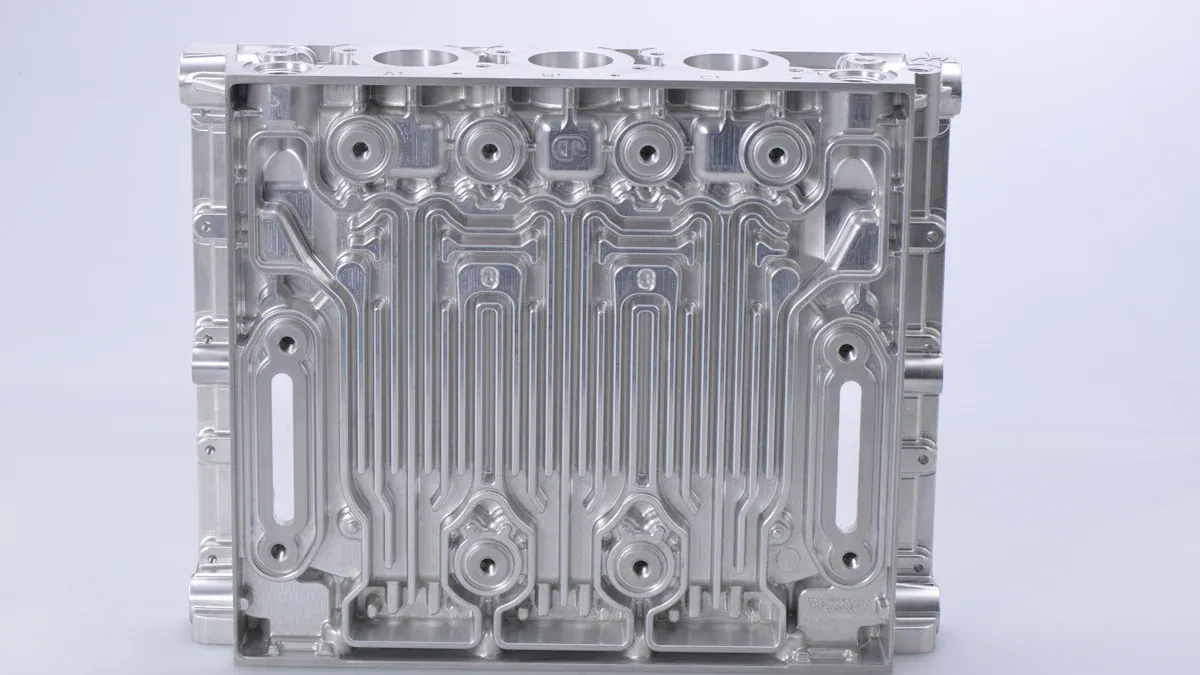
Image Source: unsplash
You balance initial tool prices with long-term savings. This happens when you start a casting job.
Initial mold prices depend on part shapes:
Simple molds cost $3,000 to $10,000 each.
Standard complex molds cost $15,000 to $75,000.
Big multi-part molds cost $100,000 to $150,000+.
Suppliers build strong die tooling from H13 steel. This steel has a 48-52 HRC rating. This top material lasts past 1,000,000 casting runs.
You pay for the fixed mold first. Then, your extra unit part cost stays low. Your unit part cost covers metal, time, and work.
Making many parts lowers the total price per part.
Metrics / Volume Level | Low Volume Production (< 5,000 units) | High Volume Automotive Production (1,000,000+ units) |
|---|---|---|
Upfront Tooling Expense | High price for a small output | Huge starting investment |
Per-Unit Impact | High | Low |
Financial Justification | Hard to justify the start cost | Mold pays off over time, saving much money |
Part detail and order size change your costs:
Fixed High Initial Investment: Molds cost $15,000 to $100,000 total.
Low Variable Costs: Factory work adds $2 to $8 per part.
Amortization Savings: Large orders lower your true unit part cost.
Foundries find project fees using set formulas. You figure out die casting cost easily. Just split up each build step.
Shops find real fees using clear math rules:
Unit Cost = (Total Fixed Costs / Quantity) + Variable Cost
Total Cost = Fixed Costs + (Variable Cost * Units)
Machine hourly rates change part fees. Shops find this fee with one formula: Ke = (t / Y * Ch) + Labor. Here, Ch is the machine hourly rate. Symbol t is the machine cycle time. Symbol Y is your yield rate. These machine numbers show real part costs.
Raw metal costs $20 to $30 a kilo. Base plant fees start at $8.38 a kilo. Foundries add markups up to 65 percent. This markup moves final metal rates to $24.20. Aluminum Die Casting fees grow with part size.
Cost Driver | Mechanism of Impact on Material Cost |
|---|---|
Shot Weight & Size | Material expenditure directly scales with the physical dimensions and total shot mass required per casting. |
Scrap Loss Rate | Average scrap rates of 8% to 10% elevate material and energy consumption per acceptable unit, driving up net expenses through defect-driven rejects. |
Gating & Runner Yield | Inefficient gating systems and low-yield runners reduce usable alloy utilization, requiring higher raw material inputs. |
Scrap Recovery & Re-melt | Implementing closed-loop re-melting and recycling systems helps offset raw alloy spending by reusing excess material. |
Suppliers spread expenses across early build steps. Strong steel takes much of your mold price. CNC tools trim features to tight fits. High scrap rates raise total fees fast. Smart gating lowers your unit part cost. Good mold prep protects your overall budget.
You pick your metal alloy early. Standard aluminum alloys like A380 work well. They offer strength and good flow. Special alloys boost raw material price. Global raw aluminium prices change daily. Market supply shifts these rates constantly. Melting metal near 700°C uses energy. High energy consumption alters your budget.
Complex shapes change die casting cost. Deep pockets need special tooling inserts. Thin walls also need custom inserts. You must balance all key features. This balance protects your manufacturing budget.
Variable Category | Key Drivers / Factors | Market Price & Cost Impact |
|---|---|---|
Design Complexity | Intricate shapes, thin walls, deep pockets | Needs complex tooling. Increases build times. |
Tolerance Requirements | High accuracy demands like automotive parts | Needs top steel. Raises tooling costs. |
Raw Material Dynamics | Global market rates, alloy additives | Material pricing shifts your total costs. |
Energy & Material Prep | High melting heat up to 700°C | Energy consumption raises overall utility bills. |
Tooling Investment | Precision steel molds | Big start costs impact unit rates. |
Big casting machines cost more per hour. Large hydraulic presses use high clamp force. Long cooling cycles raise total production cost. They add extra machine run time. Faster runs lower your unit cost. Internal cooling lines shorten cycle time.
Your initial casting makes near-net shapes. Finished parts need extra post-processing work. CNC tools trim features for tight fits. Surface treatments stop severe oxidation on parts. These extra steps raise production cost.
Fix designs early. It cuts total die casting cost. Simple shapes save money.
Draft angles stop part damage. Tapered walls slide out easily. This step lowers total expenses.
Feature Category | Recommended Minimum Draft Angle | Additional Conditions |
|---|---|---|
Internal Wall Base | 2.0° to 3.0° | Essential for standard core features |
Deep Pocket Ribs | 2.0° | Requires integration with blend radii |
Incremental Depth Rule | Extra 0.5° to 1.0° | Add per extra 25mm depth |
Deep holes need bigger angles. Same wall thickness cools faster. Short cooling cuts cycle time.
Keep mold layouts simple. Undercuts block straight part release. Extra sliding cores cost much money.
Custom moving slides raise die tooling prices.
Hot metal causes heat shock.
Slides wear out very fast.
Redesign tricky side features. Removing slides saves factory cash.
Use strict sizes only on main parts. Standard rules save mold money. Sharp corners ruin steel fast. Smooth rounded corners help metal flow easily. Smart shapes lower your final cost.
You need a good quote to manage your budget. Clear details help shops find exact mold prices. Plants run Aluminum Die Casting work using set facts.
You must send clear digital files for a quote. Precise 3D models and paper drawings show real shapes. Shops review these files to check your build design.
To get precise prices, your RFQ must list these key items:
Annual Volume and Tooling Assumptions: Planned order numbers, project length, and mold ownership shift unit part cost setups.
Part Geometry Intent: Clear rules for wall thickness and parting lines guide metal flow.
Alloy Selection & Material Properties: Exact metal grades and key strength needs ensure good output.
Post-Machining & Precision Requirements: Clear notes for CNC work show key tight spots like smooth surfaces.
Your order size shifts die tooling steel picks and mold layouts. Large orders justify bigger starting costs to drop your unit cost.
Steel Grade Selection & Material Resilience: High output demands need top steel. These metals resist heat and heavy wear.
Tooling Amortization: Big runs split starting mold fees across many parts.
Operational Efficiency: Matching strong steel with multi-cavity molds boosts output speed.
The table below shows how order size changes build choices:
Decision Category | Low-Volume / Prototype Impact | High-Volume Production Impact |
|---|---|---|
Die Steel Grade Selection | Normal tool steel works for small runs. | Needs top steel grades to boost mold life. |
Multi-Cavity Layout Decisions | Single-cavity molds drop starting risk. | Multi-cavity molds raise output and drop your unit part cost. |
Picking metal alloys shifts part strength and heat control. Basic metal grades also change your raw alloy budget. Send full data early to get a clean quote without surprise fees.
High initial mold cost pays off as volume grows. Larger order size lowers your unit part cost.
First, check target quantities. Pick temporary die tooling for short runs. Select hardened steel dies for big runs. This drops unit cost during Aluminum Die Casting. Next, run a full DFM review early. Spotting bugs early cuts overall die casting cost.
Stage | Fix Cost | Tooling Savings |
|---|---|---|
Pre-Production DFM Phase | Low ($50 – $5,000) | Saves 20%–40% |
Post-Steel Cutting Phase | High ($5,000 – $50,000) | Requires expensive extra casting work |
Simplify your design early. Remove sliding cores. Add wide draft angles. These steps lower tooling costs fast.
Pro Tip: Simple shapes reduce tool wear.
Shops check volume to pick die steel grades. High orders allow multi-cavity dies. They lower your unit part cost.
Foundries send detailed quotes in two business days. Send 3D CAD files and drawings first. List alloy specs and annual volume.
Shot weight and cycle time drive unit cost. Heavy parts use more alloy. Long cycles raise machine rates.
