
Views: 0 Author: Site Editor Publish Time: 2026-10-15 Origin: Site


Selecting the ideal material for your tooling is rarely just a minor technical formality. It acts as the primary driver behind your unit cost, unexpected downtime, and part consistency during high-volume manufacturing. Buyers often focus heavily on the final cast alloy, such as aluminum, zinc, or magnesium. However, the underlying tooling steel actually dictates the scalability and financial viability of the entire process. Without the right steel, even the most optimized design will fail prematurely on the factory floor. You need a robust evaluation framework for selecting high-performance tooling based on essential thermal properties, projected lifespan, and overall project economics. In this guide, we will explore exactly how raw material choices impact your production runs. You will learn to identify the best steel grades for specific alloys and uncover the hidden risks of underspecified mold materials.
Premium tooling steel directly correlates to extended mold life, reducing the amortized cost per part in high-volume production.
Thermal fatigue resistance and toughness are the non-negotiable evaluation metrics for minimizing "heat checking" and costly downtime.
The choice of die casting mold material must align specifically with the melting point and corrosiveness of the cast alloy (e.g., aluminum requires higher-grade steel than zinc).
Evaluating a manufacturing partner requires verifying their adherence to strict heat treatment and steel certification standards (e.g., NADCA specifications).
If you specify an inferior material for your Die-Casting Molds, the financial impact hits your operation almost immediately. Premature wear leads directly to flash formation along part parting lines. You must then spend extra labor hours on secondary trimming operations. Unplanned maintenance downtime also spikes significantly. Every hour your machine sits idle, your overhead costs multiply. Subpar tooling degrades rapidly under pressure. This forces your technicians into constant troubleshooting mode rather than steady production.
Upfront investment in premium tooling pays off immensely through economies of scale. Let us assume you choose premium H13 or proprietary tool steels for your dies. Initially, the tooling invoice looks steep. However, this investment yields an exponentially lower cost-per-part over runs of 50,000 to 100,000 shots. The math becomes undeniable once you calculate the amortized cost across a long production cycle. A die built from premium materials stays in the press longer. It requires fewer interventions and produces consistently usable parts.
Material stability equals yield predictability. You rely on dimensional accuracy and strict tolerance adherence during continuous runs. This is absolutely critical for compliance in the automotive and aerospace sectors. Premium steel resists thermal expansion and structural shifting. Therefore, part number 10,000 matches part number one perfectly. When your tooling holds its shape, your rejection rate plummets. You can confidently ship orders on time.
The industry standard remains H13 tool steel. It offers a highly reliable balance of red hardness, toughness, and thermal fatigue resistance. Manufacturers rely on it primarily for standard aluminum and magnesium operations. It performs dependably under typical thermal loads. H13 dominates the market because it responds exceptionally well to heat treatment. You get a versatile, durable cavity capable of handling moderately complex part designs.
Some projects demand much more from the tooling. You might need Dievar or Orvar Supreme when applications require extended tooling life. These premium steels excel when you cast highly complex geometries. They also offer superior resistance to gross cracking. High-alloy variants cost more initially but handle intense stress cycles far better than standard grades. We recommend them for structural automotive components. They ensure the die survives the extreme pressures required to fill thin-walled designs.
We must set clear limitations regarding lower-tier options. Use P20 and similar lower-alloy steels only for low-melting-point alloys like zinc. They also work adequately for short-run prototyping. If you try to run Die Casting for aluminum in a P20 die, the heat will destroy the cavity almost instantly. Knowing these material limits prevents severe buyer remorse. You should match the steel grade exactly to the thermal demands of your specific cast alloy.
Steel Grade Category | Primary Cast Alloys | Key Advantages | Best Application Scenario |
|---|---|---|---|
H13 Tool Steel | Aluminum, Magnesium | Excellent thermal fatigue resistance, balanced toughness. | Standard medium-to-high volume production runs. |
Premium/High-Alloy (e.g., Dievar) | Aluminum, High-Temp Alloys | Superior resistance to gross cracking and heat checking. | Complex geometries, structural parts, ultra-high volume. |
P20 / Lower-Alloy | Zinc, Lead | Highly machinable, lower raw material cost. | Low-melting point alloys or rapid prototyping runs. |
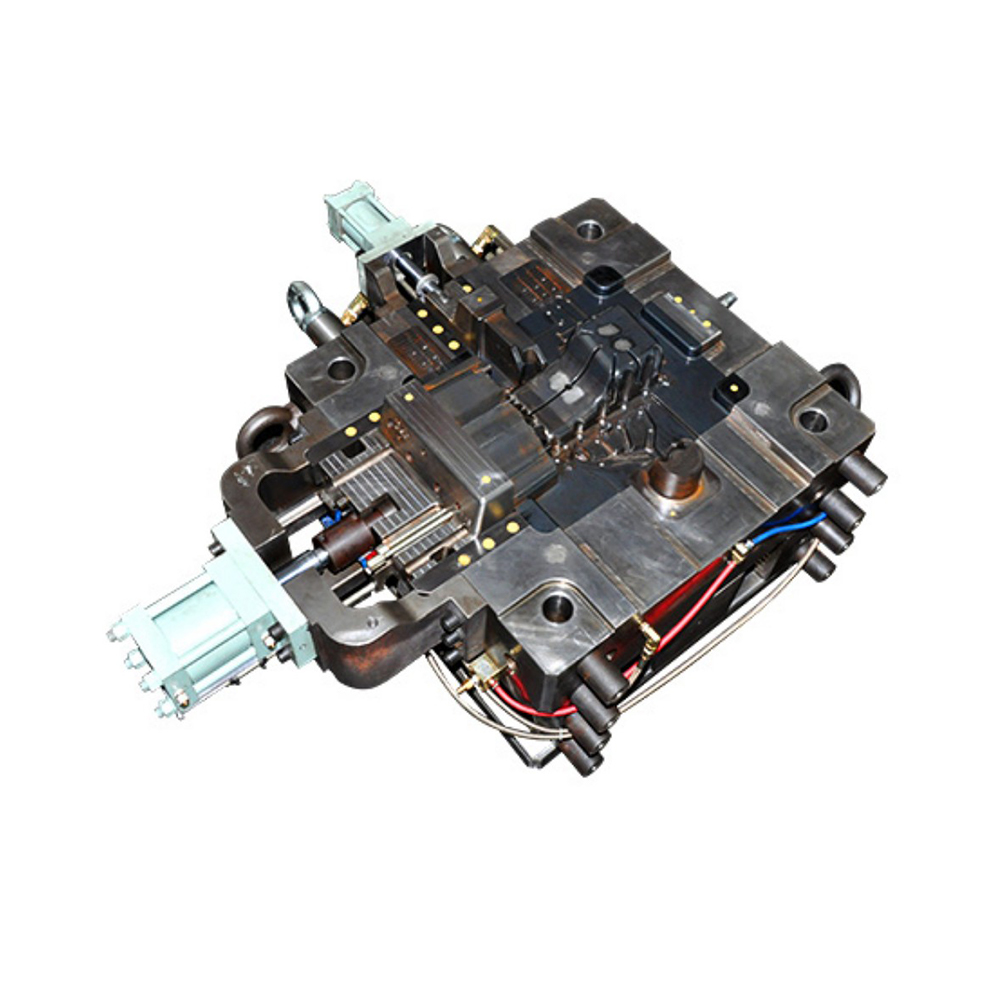
These molds endure continuous and severe thermal shock. Molten metal shoots into the cavity, spiking the temperature instantly. Rapid cooling sprays follow immediately afterward. This cycle causes violent expansion and contraction across the cavity surface. We evaluate a material's ability to resist the resulting surface network cracks, commonly known as "heat checking." A high-grade material absorbs this thermal shock efficiently. It delays the onset of these micro-cracks over thousands of production cycles.
To accurately evaluate thermal fatigue resistance, engineers typically follow specific diagnostic steps:
Analyze the raw steel's microstructural purity and isotropic properties.
Calculate the expected temperature delta between injection and quenching phases.
Review historical shot-count data for the chosen steel grade under similar thermal loads.
Determine if the cooling channel design will adequately support the steel's thermal transfer rate.
Molten metal enters the cavity under extreme injection pressure. The mold must maintain structural integrity without any deformation. If the steel lacks high-temperature yield strength, the cavity walls will bend or warp. This directly ruins your part dimensions. You need steel designed specifically to hold its rigid shape at operating temperatures exceeding 400°C. Standard carbon steels soften at these temperatures. Premium tool steels maintain their hardness precisely when the pressure peaks.
Liquid aluminum acts as a powerful solvent. It interacts chemically and physically with the cavity walls during injection. Without proper precautions, the molten metal literally solders itself to the steel. You must specify specific alloys to resist this aggressive erosion. We also highly recommend targeted surface treatments. Nitriding creates a hardened barrier layer on the cavity surface. This barrier effectively prevents soldering and prolongs die life dramatically. It keeps the part surfaces smooth and clean.
Even the best raw material will fail without precise heat treatment. You must verify certified vacuum heat treatment protocols. Improper tempering leaves the steel either too brittle or too soft. We often see top-tier steel ruined completely by rushed hardening processes. The steel must undergo controlled austenitizing, followed by rapid quenching and multiple tempering cycles. Always ask your supplier for their thermal processing charts. This documentation proves they handled the expensive raw material correctly.
Sometimes raw steel needs extra help to survive harsh environments. We specify additional surface coatings to enhance baseline benefits. Physical Vapor Deposition (PVD) or specialized nitriding can drastically improve wear resistance. You should request these coatings when casting highly abrasive alloys. They also help when aiming for ultra-high shot counts. Surface engineering provides a critical shield against the continuous friction of injected metal. It reduces the frequency of necessary polishings.
Let us be perfectly transparent regarding maintenance. Premium materials still require routine care to reach their maximum lifespan. If a supplier claims a die needs zero maintenance, they are misleading you. You must mandate a strict maintenance schedule.
Schedule routine stress-relieving procedures every 10,000 to 20,000 shots.
Perform regular ultrasonic cleaning to remove accumulated lubricants and debris.
Inspect cooling channels for scale buildup to maintain optimal thermal transfer.
Execute micro-polishing to remove early signs of soldering before they worsen.
Never assume you are getting genuine premium tool steel by default. Always advise your procurement team to request material certifications. Some suppliers try to substitute low-cost equivalents to pad their margins. A certified mill test report proves you are getting the exact chemistry you paid for. It verifies the presence of vital alloying elements like molybdenum and vanadium. Genuine steel guarantees predictable performance. Counterfeit or low-grade steel introduces massive risk into your supply chain.
We instruct evaluators to look for strict compliance with established industry standards. The North American Die Casting Association (NADCA) sets the global benchmark here. Their specifications ensure the steel meets exact toughness and microstructure requirements. Look specifically for NADCA 207 compliance or equivalent international standards. A supplier adhering to these guidelines demonstrates deep technical competence. They understand exactly how metallurgical structure dictates final tooling performance on the shop floor.
You need a clear framework for accountability regarding failures. Ask suppliers who bears the financial cost of repair if the die fails early. A reliable partner guarantees a specific shot count upfront. If the tool cracks before reaching that number, they should cover the replacement or repair entirely. Get this warranty in writing before signing the contract. Clear replacement policies protect your investment and keep your production timeline secure.
The ultimate benefits of the process—rapid speed, high precision, and low unit cost—are entirely gated by tooling quality. You cannot achieve peak manufacturing efficiency using subpar steel. Every decision made during the material selection phase echoes throughout the entire production lifecycle. High-quality tooling ensures predictable yields and protects your profit margins from unforeseen downtime.
We strongly advise decision-makers to prioritize tooling longevity over initial invoice costs when evaluating project quotes. A cheaper tool will inevitably cost you much more in unplanned maintenance and rejected parts. Evaluate suppliers based on their adherence to rigorous metallurgical standards.
We encourage you to submit your 3D CAD files to our engineering team today. We provide a comprehensive Design for Manufacturability (DFM) review and a completely transparent tooling consultation. Let us help you select the exact steel grade necessary to maximize your next high-volume production run.
A: The lifespan heavily depends on the cast alloy and routine maintenance. For aluminum, a well-maintained H13 die typically lasts between 80,000 and 120,000 shots. Zinc applications run much cooler, allowing the same steel to easily exceed one million shots. Proper stress-relieving treatments at regular intervals will maximize these final shot counts.
A: Aluminum has a significantly higher melting point and is highly corrosive to steel. This aggressive nature necessitates higher-grade premium tool steels and advanced vacuum heat treatments. Zinc melts at a lower temperature, allowing manufacturers to use less expensive, lower-alloy steels like P20 without risking premature cavity degradation.
A: Many minor issues can be repaired easily. We often use laser welding or install replacement inserts for localized wear. However, if severe thermal fatigue or deep gross cracking occurs across the main block, replacement becomes the safer commercial decision. Patching a heavily degraded tool often leads to unacceptable dimensional shifts.
