
Views: 0 Author: Site Editor Publish Time: 2026-10-08 Origin: Site


Selecting a metal casting method often creates significant friction for businesses. You must carefully balance high upfront capital expenditures against long-term unit cost reductions. This decision shapes both your immediate budget and future profitability. This guide provides procurement teams and mechanical engineers a transparent, metric-driven framework. We will help you evaluate permanent mold casting alongside high-pressure alternatives.
Neither process holds universal superiority over the other. The correct choice depends strictly on your production volume, mechanical stress requirements, and acceptable lead times. Approaching this choice objectively saves you from costly manufacturing bottlenecks. Read on to discover exactly how to evaluate your next production run. You will learn how to assess tooling options and specify the best casting process for your application.
Tooling Investment: High-pressure die-casting molds require significantly higher upfront investment due to complex hardened steel requirements, whereas permanent molds are less capital-intensive.
Volume Thresholds: Permanent mold casting is typically cost-effective for runs of 1,000 to 10,000 units, while die casting becomes financially viable above 10,000+ units.
Part Integrity: Permanent mold parts generally suffer from less gas porosity and can undergo structural heat treatments (e.g., T6), unlike standard die-cast parts.
Cycle Speed: Die casting offers unmatched cycle times and thinner wall capabilities, driving down the per-part cost at high volumes.
Understanding how molten metal enters a cavity reveals the fundamental differences between these processes. The fluid dynamics during filling dictate the final mechanical properties of your parts. Let us examine both methods closely.
In this process, operators pour molten metal into a reusable metallic mold. They rely entirely on gravity or very low pressure to fill the cavity. This simple approach yields surprisingly robust results. You avoid the violence of high-speed injection. The process favors simple gating systems and relies heavily on strategic riser placement.
Slower filling promotes highly beneficial cooling dynamics. The liquid metal enters the mold smoothly. This calm flow minimizes turbulence. Consequently, you achieve a much denser microstructure. Operators can also control directional solidification more easily. They apply localized cooling or insulating coatings to specific mold areas. This ensures the thickest sections feed properly before freezing.
High-pressure processes take a radically different approach. Machines force molten metal into a sealed die cavity under extreme pressure. Injection pressures often exceed 1,500 psi. Ram speeds operate in milliseconds. This brute-force method ensures the metal reaches every extremity of a complex cavity before solidifying.
Rapid solidification allows for extremely fast cycle times. You can produce parts at an astonishing rate. However, this speed introduces significant risks. The turbulent flow traps air inside the cavity. Vents often freeze before all gases escape. This trapped air creates internal porosity. While the outer skin remains incredibly dense, the internal structure may lack the integrity found in gravity-poured parts.
Tooling decisions dominate your initial manufacturing budget. You must understand the specific cost drivers behind each mold type to justify your capital expenditure.
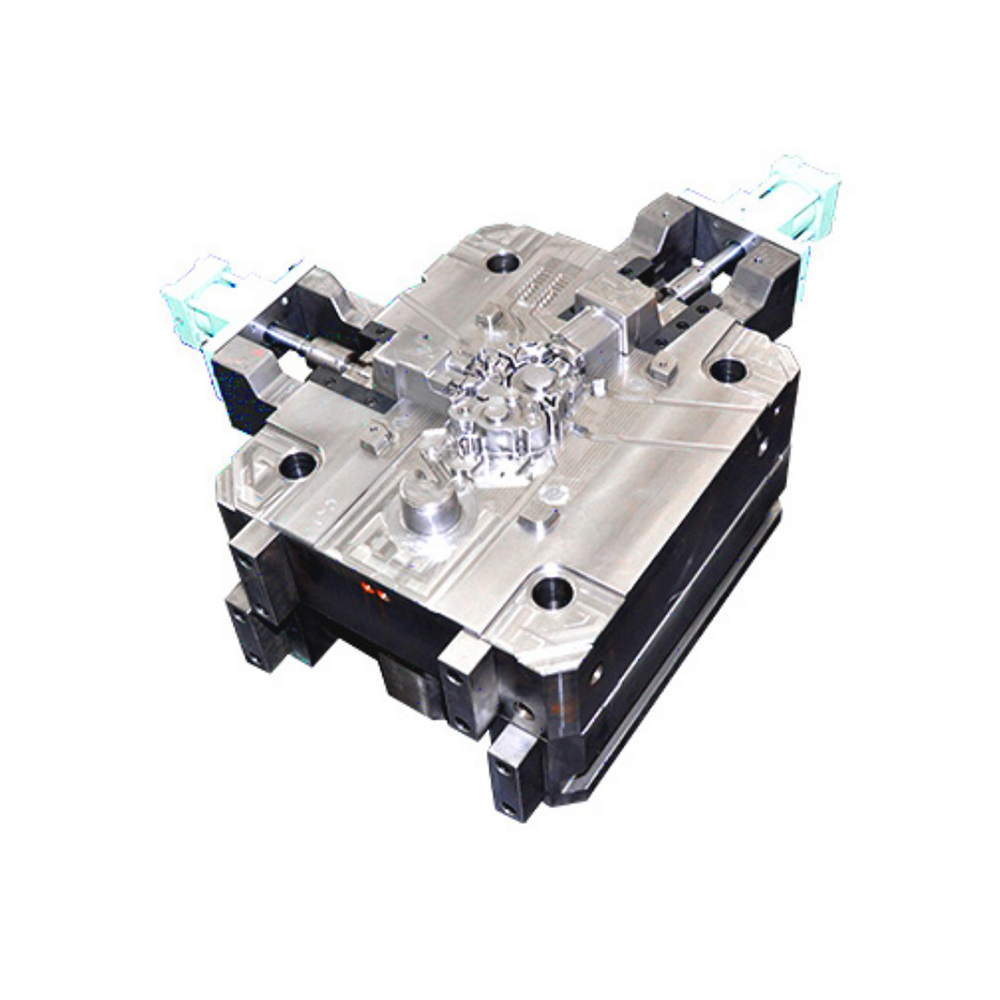
Producing reliable Die-Casting Molds requires premium materials. Toolmakers typically use hardened tool steels like H13. These blocks must withstand severe thermal shock and immense injection pressures. The machining process is demanding. It requires slow, precise CNC milling and electrical discharge machining (EDM) to cut the hardened steel. Furthermore, engineers must design complex gating systems, overflow wells, and internal cooling channels. All these requirements compound the initial cost.
Permanent molds offer a more budget-friendly alternative. Foundries typically machine them from cast iron or graphite. These materials cut easily and rapidly. The mold designs remain relatively simple. They lack the elaborate cooling lines and high-pressure seals required elsewhere. Consequently, you typically see 30% to 50% lower initial tooling costs. This reduction frees up capital for other project phases.
Molds degrade over time. The rate of degradation depends on the thermal and physical stresses they endure. High-pressure dies experience severe thermal fatigue. The rapid cycle of injecting hot aluminum and then flushing cold water through internal lines creates microscopic surface cracks. Engineers call this "heat checking." Over hundreds of thousands of cycles, the steel also suffers from washout—erosion caused by high-velocity metal flow.
Permanent molds face far less physical stress. Gravity pouring introduces molten metal gently. The absence of high velocity prevents washout. You achieve a highly stable lifespan. However, you must consider throughput. Slower cycle times mean you get less overall output per mold per shift. You might need multiple molds to match the daily output of a single high-pressure machine.
Time-to-market often dictates business success. You must frame your tooling decision around lead times. Machine shops can cut and validate permanent molds weeks faster than complex high-pressure dies. If you need to launch a product rapidly, gravity casting provides a distinct schedule advantage. You avoid the lengthy heat-treatment cycles required for premium tool steels.
Volume dictates viability. You cannot select a casting process without calculating your break-even point. We recommend a structured amortization approach to evaluate the financial feasibility.
You must calculate the amortized tooling cost added to your per-unit material and labor expenses. Follow this framework to evaluate your scale:
Isolate the total initial capital expenditure for the mold.
Estimate your expected lifetime production volume.
Divide the tooling cost by the expected volume (Amortized Cost per Unit).
Add the quoted piece-price (which includes labor, machine time, and material).
Compare this combined figure across different casting methods.
Permanent mold casting dominates the low-to-medium volume bracket. We define this range as 1,000 to 10,000 units. The lower tooling burden quickly offsets the slower cycle times and slightly higher unit costs. You reach profitability much faster.
Conversely, Die Casting scales beautifully for high-volume runs. Once you surpass 10,000 units, the math shifts. The massive reduction in cycle time drives your piece-price down dramatically. High-pressure processes also yield near-net shapes. This eliminates expensive secondary CNC machining. These operational savings rapidly offset the expensive tooling initial costs.
Every manufacturing decision carries risk. Over-capitalizing on high-pressure tooling for an unproven product represents a major financial hazard. If the product fails in the market, you cannot recover the massive mold investment. On the other hand, relying on a slow gravity process during a massive demand spike creates bottlenecks. You risk stockouts and lost revenue. You must accurately forecast demand to balance these scalability risks.
Engineers care deeply about mechanical properties. How a part performs under stress dictates its suitability for structural applications. You must understand how cooling dynamics affect part integrity.
Permanent mold castings often achieve higher ultimate tensile strength and excellent ductility. Gravity pouring minimizes turbulence. This calm flow prevents oxide inclusions and keeps the metal pure. The slower cooling rate allows grains to form a dense, uniform microstructure.
More importantly, you can safely heat-treat gravity-cast parts. Engineers frequently specify T6 temper for aluminum parts. This involves solution heat treating, quenching, and artificial aging. The process maximizes the alloy's mechanical properties, making it ideal for suspension components or load-bearing brackets.
High-pressure injection inherently causes trapped gas. The sheer speed of the ram forces air into the metal before it can vent. This creates internal porosity. While modern foundries use overflows to mitigate this, microscopic voids remain.
This trapped gas has severe consequences. Standard high-pressure parts typically cannot undergo structural heat treatment. If you heat them to high temperatures, the trapped gases expand. This expansion causes severe surface blistering and structural distortion. You also cannot easily weld these parts for the same reason. Unless you invest in specialized vacuum-assisted machines, high-stress structural applications remain challenging.
High-pressure injection excels in achieving tight tolerances. The massive clamping forces and injection pressures replicate mold details perfectly. You can easily cast complex geometries and ultra-thin walls down to 1.5mm. This drastically reduces your need for post-cast CNC machining. The parts often emerge ready for assembly or basic surface coating.
The following chart illustrates how these two methods compare across key engineering dimensions.
Attribute |
Permanent Mold (Gravity) |
High-Pressure Injection |
|---|---|---|
Wall Thickness Minimum |
Typically 3.0 mm+ |
Down to 1.5 mm |
Heat Treatability (e.g., T6) |
Excellent |
Generally Poor (Blistering Risk) |
Internal Porosity |
Very Low |
Moderate to High |
Surface Finish out of Mold |
Good (Slightly textured) |
Excellent (Smooth) |
Dimensional Tolerances |
Moderate (Requires machining) |
Tight (Near-net shape) |
Transitioning from a 3D CAD model to a physical part requires rigid oversight. Ignoring process-specific constraints guarantees failure. You must adapt your design to your chosen manufacturing method.
Engineers often make the mistake of using identical CAD files for different casting methods. You cannot do this. You must respect process-specific DFM rules.
Draft Angles: High-pressure parts require 1-2 degrees of draft for ejection. Gravity cast parts often need 3-5 degrees due to slower cooling and greater shrinkage around cores.
Wall Thickness: Gravity casting demands uniform wall transitions to prevent shrinkage voids. High-pressure injection tolerates varied walls better but risks warping if not balanced.
Shrink Rates: You must calculate exact alloy shrink rates. Failing to accommodate shrinkage results in out-of-tolerance features.
You must implement rigorous inspection protocols. The inspection methods vary based on the process used.
For high-pressure parts, focus on internal defects. You should mandate X-ray inspections to check for internal porosity, especially near critical load paths. If the part serves as a fluid housing, perform automated leak testing. Trapped air often connects to form leak paths.
For permanent mold parts, focus on surface integrity and fill consistency. You should utilize dye penetrant testing. This method highlights microscopic surface cracks caused by uneven cooling. Additionally, verify the fill weight to ensure the risers fed the casting adequately.
Both processes excel with standard Aluminum and Zinc alloys. However, specific alloys perform better in specific environments. High-silicon aluminum alloys (like A380) offer incredible flowability. They remain the undisputed champions of high-pressure injection. Conversely, alloys designed for high ductility and heat treatment (like A356) perform exceptionally well in gravity applications.
You now have the technical data. We must consolidate this into actionable criteria. Use the following framework to shortlist your manufacturing approach.
Opt for gravity-fed permanent molds when your project meets these conditions:
The part requires high structural integrity and pressure tightness.
You need to perform a T6 structural heat treatment.
Your annual production volumes remain predictable and stay under 10,000 units.
Your upfront capital expenditure budget is heavily constrained.
You need a shorter lead time to launch your product.
Select high-pressure injection when your requirements align with these factors:
The component features ultra-thin walls and intricate cosmetic details.
You require a near-net shape right out of the mold to avoid CNC work.
Your production demands easily exceed 10,000 units annually.
Minimizing the per-part piece price is your primary financial directive.
Do not finalize your decision based solely on internal estimates. We strongly recommend conducting a formal DFM review. Partner with a foundry that offers both gravity and high-pressure capabilities. This ensures you receive unbiased process selection advice. Require them to provide a formal tooling ROI breakdown for both methods. This data-driven approach removes emotion from your procurement strategy.
Choosing the best casting process is a strict mathematical and engineering equation. It is never a matter of personal preference. You must align your tooling investment directly with your volume expectations and mechanical requirements.
Over-investing in complex molds too early in a product's lifecycle destroys your return on investment. Conversely, under-investing in tooling for high-volume, thin-walled parts will cripple your unit margins long-term. You must thread the needle carefully between CapEx and operational efficiency.
We encourage you to take immediate action. Submit your 3D CAD files to a qualified manufacturing partner today. Request a comparative cost analysis and a detailed tooling amortization schedule. Let the data dictate your next successful production run.
A: Generally, no. Permanent mold casting requires more generous tolerances. Because gravity provides less force, the metal does not replicate the mold perfectly. You will often require secondary CNC machining for critical mating surfaces and threaded holes.
A: The expense stems directly from raw material and machining complexity. You must use premium H13 tool steel. Furthermore, the rigorous heat-treating of the die and the complex internal cooling channels require extensive engineering and precise EDM machining.
A: No. Draft angles, gating strategies, and wall thickness rules differ significantly. High-pressure methods allow thinner walls and tighter drafts. Gravity pouring requires uniform walls and generous drafts to prevent shrinkage defects.
A: Sand casting serves as the ideal choice for ultra-low volume runs, rapid prototyping, or massive components. However, it lacks the excellent surface finish, tight tolerances, and mold reusability provided by permanent metallic tooling.
